| Work With Us |  |
Reflections and documentation about the environment, indigenous peoples, and sustainability of Bentara Papua's work in Papua.
The Dining Table That Lost Its Soul
03 June 2026 - by Ewil M. Woloin
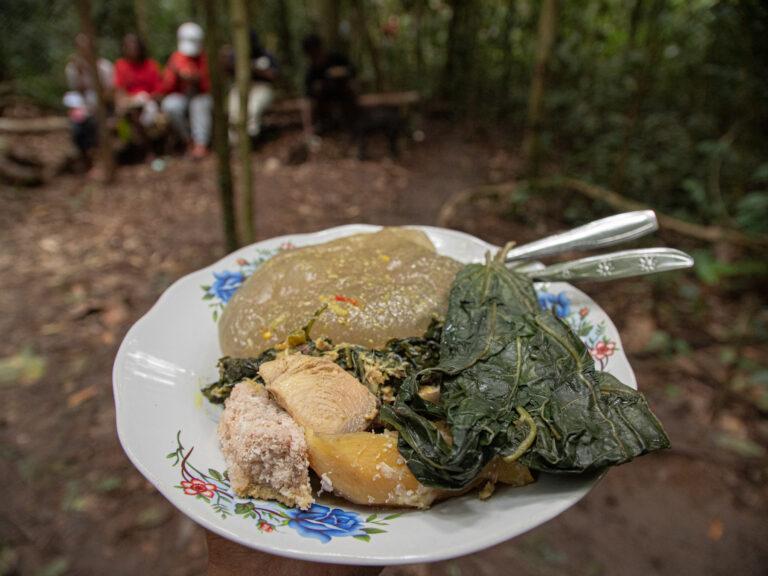
At the dinner table today, conversations are no longer just about taste, but about prestige. There is a paradox that is both intriguing and saddening: amid this rapid pace of national development, regional languages and local foods are often viewed as obstacles to progress. Today’s generation seems to be led to believe that to achieve national progress, they must abandon what grows from the land of their ancestors. In the past, the smoke rising from roasted sago, the warmth of a bowl of chewy papeda, the distinctive aroma of roasted taro, and the deliciousness of vegetables cooked inside bamboo were symbols of resilience, blessings, and identity. These foods were not merely sustenance, but weavers of stories from generation to generation. The era of roasted sago and taro was an era in which humans lived in harmony with nature. Ironically, the stigma that local food is outdated didn’t just appear out of nowhere. It was instilled from an early age, even creeping into our classrooms. I recall a memory from when I was in third grade. Back then, my elementary school teacher said something that has stayed with me to this day: “You kids are super because the future is coming; your brains are even more super because you eat Supermi, Superco… super food.” That statement from the past is clear evidence of how the illusion of progress has begun to erode our pride. The “super” label is instead pinned on factory-made instant foods imported from abroad. Meanwhile, sago, taro, and the natural products that sustained our ancestors for centuries are slowly being pushed aside, regarded as ordinary foods that don’t bring modernity. As a result of such subtle doctrines, the era of sago and taro now seems to be receding further and further. Local foods are no longer favorites among the younger generation. Not because their flavors have faded, but because of an invisible barrier called a sense of inferiority. There is a false stigma that is slowly seeping into the minds of today’s young people: that eating grilled taro or traditional vegetables cooked in bamboo are symbols of backwardness. Conversely, consuming the instant and modern foods popular in big cities is seen as a ticket to progress. The fear of being considered “uncool” or “out of step with the national trend” has ultimately come to dominate what they put on their plates. When regional languages begin to be spoken less frequently because they are seen as limiting social interaction at the national level, and when local foods are pushed off the dinner table in favor of foreign lifestyles, we are actually facing a real identity crisis. National development should elevate and strengthen cultural diversity and regional foods as pillars of the nation, not homogenize the contents of our plates and the way we speak into a single, monotonous hue. We must realize that “super brains” and a progressive future do not stem from dependence on packaged instant foods, but from a generation that is smart and brave enough to safeguard its food sovereignty and identity. If the younger generation continues to feel inferior about its own culinary heritage, then in the future, papeda, grilled sago, grilled taro, and bamboo shoots will merely become footnotes in history books, a faded memories of an era that lost the battle against the tide of modernization. |
Other Publications
|
Dapatkan Informasi dan Update Terbaru dari Kami


